The Berm, the Burn, and the Banana: Heat-Beating Comfort in Northern Sac
Riverside living, minus the river view. A red-tomato harvest, a lesson in suckers, slightly chilled Cabernet against the NorCal burn, and Grandma's pot roast reheated in her honor.
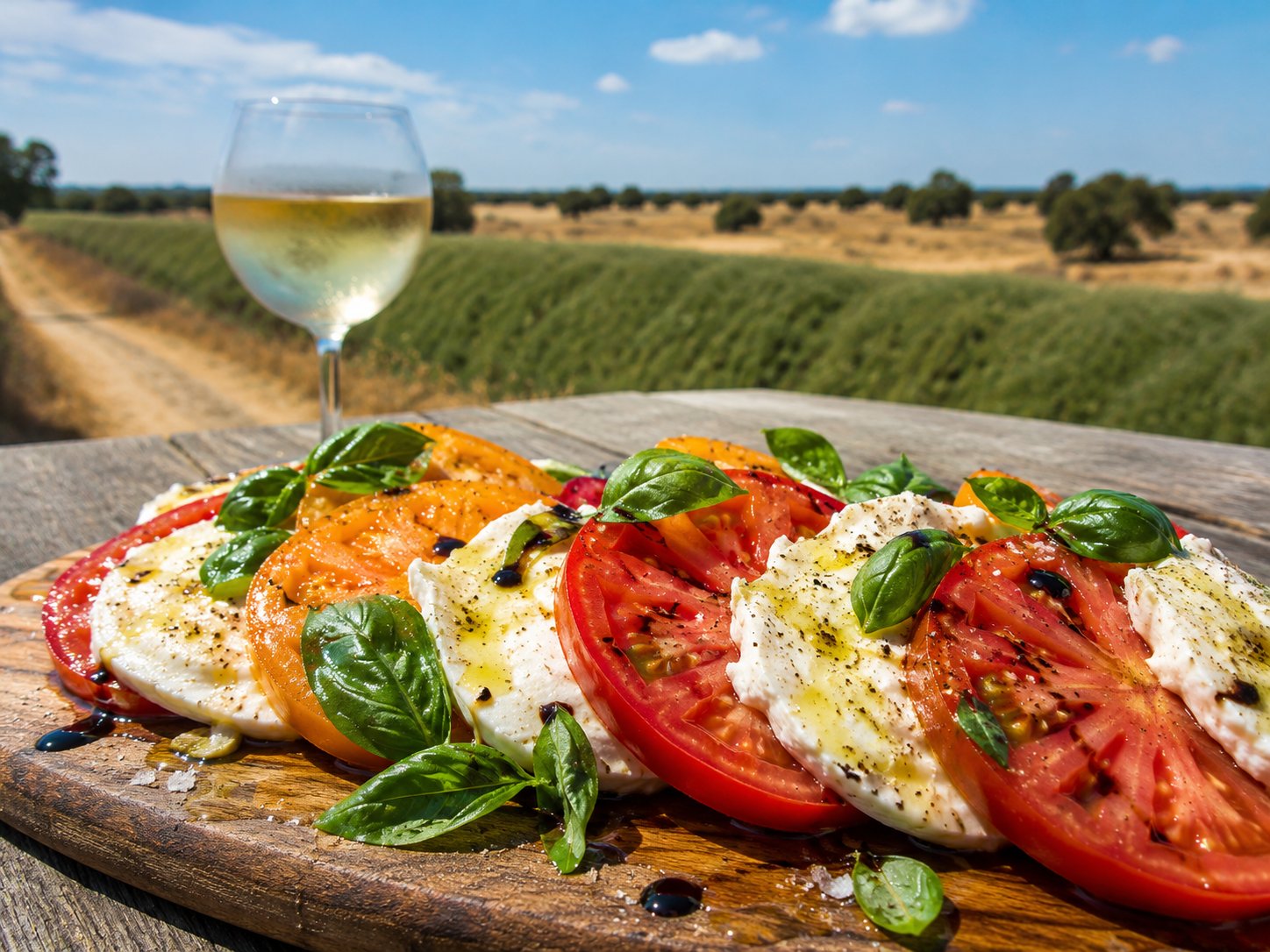
We call it Riverside living. The river is, technically, right there, forty yards off the back fence. It is also entirely invisible, because between us and the water sits a berm the size of a beached whale, a long earthen wall the flood district built to keep the Sacramento from coming over for dinner uninvited.
So you don’t see the river. You believe in it. It’s mind theater: you sip something cold, you gaze at a wall of summer-gold grass, and you imagine the cool water sliding by on the other side. Most of the time that’s enough. The brochure said Riverside. The brochure was, in the way of all brochures, technically not lying.
The compensating mercy of all this heat (and it is, today, the kind of Northern California heat that arrives like an opinion) is that there are no mosquitoes. Nothing with that many legs wants to be out in this. The yard is ours alone, the air shimmering and empty, every bug in the county having filed a complaint and gone home.
The garden, and a small betrayal called the sucker
The tomatoes came in red this week. Properly red: not the orange-shouldered apology of a supermarket tomato, but the deep, almost-purple red of a thing that ripened on the vine because nobody was in a hurry.
The stars are the Juliets, those little grape-Roma hybrids that grow in heavy clusters and refuse to crack. And the Juliets taught me, again, the lesson I have to relearn every single June: the sucker.
A sucker is the little shoot that sprouts in the armpit: the crotch between the main stem and a branch. It looks like ambition. It looks like more tomatoes, surely. It is a lie. Left alone it grows into a second whole plant riding piggyback on the first, splitting the energy, shading the fruit, turning one productive vine into two confused ones.
So you pinch them. Thumb and forefinger, a clean snap while they’re young, and the plant pours everything back into the fruit it already started.
A garden is mostly an argument about where the energy goes. The plant wants to grow everywhere. Your job is to be the one who decides here, and not there. It is the most useful thing gardening keeps trying to teach me about everything else.
This June’s lessons, filed for next June (when I will have forgotten them):
- Check the armpits weekly. Suckers are easy to snap at an inch and a wrestling match at a foot.
- Pick red, not “red enough.” The vine finishes them better than the windowsill ever will.
- Water at dawn. By noon the hose water comes out warm enough for tea.
- The Juliets don’t need babying: they need editing.
Slightly chilled, against the rules and the heat
Here is a thing the wine internet will scold you for: when it is 104 degrees and the air is doing that wavy thing over the patio stones, you put the Cabernet in the fridge for twenty minutes first.
Not cold. Slightly chilled: just enough to take the alcoholic heat off the nose so the fruit can show up. A room-temperature Cab in this weather tastes like a campfire. Twenty minutes of fridge and the Precision Cabernet turns back into something with cassis and a little graphite and a long quiet finish. The burn outside, answered by a small considered cool inside. The Italians have been chilling their reds in August for centuries; the rest of us are slowly being allowed to admit it.
Grandma’s pot roast, reheated, which is to say: better
The real event was last night’s leftovers.
Jelyn and I made the pot roast yesterday: Grandma’s Recipe, the actual one, the one that doesn’t really write down because half of it is the order you put things in the pot and the other half is who taught you. Chuck roast, seared hard. Garlic and onion gone soft and sweet. Carrots. And this year, our own red tomatoes, dropped in to melt down into the gravy.
Reheated pot roast is a quiet miracle. A night in the fridge lets the fat and the gravy and the wine reductions stop arguing and agree on something. We warmed it slow, drizzled the carrots with a little good Partanna olive oil at the end (the bright grassy stuff, because pot roast is deep and dark and wants one green note to wake it up) and ate it out of bowls on the hot porch with the slightly-chilled Cab.
Grandma passed a few years back. She is the reason any of us know what “done” smells like before the timer says so. Eating her recipe (made by the next hands down the line, thickened with tomatoes from dirt we tend ourselves) is the closest thing this hot little stretch of Riverside has to church. You don’t say much. You just go back for more gravy.
And the banana
You’re wondering about the banana. There’s always a banana.
When the heat is genuinely unreasonable, the finest dessert in the world is a banana that’s been in the freezer since morning: sliced into coins, half a minute too cold to be polite, eaten standing in front of the open freezer door pretending to “look for something.”
The river is still back there, behind the berm, doing whatever rivers do when no one’s allowed to watch. The tomatoes will be redder tomorrow. The Cab is going back in the fridge for exactly twenty minutes. Riverside living, Northern Sac edition: you can’t see the water, but the gravy’s hot, the bugs are routed, and Grandma’s still at the table if you cook it right.
Illustrations hand-cut in raw SVG. No nano-bananas were harmed in the making of this post: they were merely, briefly, frozen.